Few video games capture pure, addictive fun like Pac-Man. Released in 1980 by Namco, this yellow character navigating neon mazes has become one of the most recognizable icons in gaming history. With more than 400,000 arcade cabinets sold worldwide and countless versions released across consoles, computers, and mobile devices, Pac-Man remains one of the most successful arcade games ever created.
But what makes Pac-Man so timeless?
The concept is simple yet brilliant: eat dots, avoid ghosts, and collect bonus items while chasing a high score. More than four decades later, Pac-Man still attracts new players while delighting longtime fans.
This article explores Pac-Man’s origins, gameplay design, and lasting cultural impact — and why it remains a highlight for visitors playing retro games at GamePlaza, Zurich’s interactive video game museum.
Birth of a Gaming Icon
Pac-Man was created by Toru Iwatani, a game designer at Namco who wanted to develop a game that would appeal to a wider audience than the typical space shooters dominating arcades at the time. Legend has it that the character’s design was inspired by a pizza missing a slice, which gave Pac-Man his iconic circular shape.
The game launched in Japan on May 22, 1980 and quickly became a massive hit. Soon after, it was released in North America by Bally Midway, where it became one of the most popular arcade games of all time. Pac-Man stood out because it attracted both male and female players, something rare in arcades at the time. In 1982, the sequel Ms. Pac-Man introduced new maze designs and improved gameplay, further cementing the franchise’s success. Players also became familiar with the personalities of the four ghosts:
- Blinky (red) – aggressively chases Pac-Man
- Pinky (pink) – tries to ambush from the front
- Inky (blue) – behaves unpredictably
- Clyde (orange) – moves erratically and retreats often
These simple enemy behaviors created surprisingly deep gameplay.
The Perfect Retro Maze Game
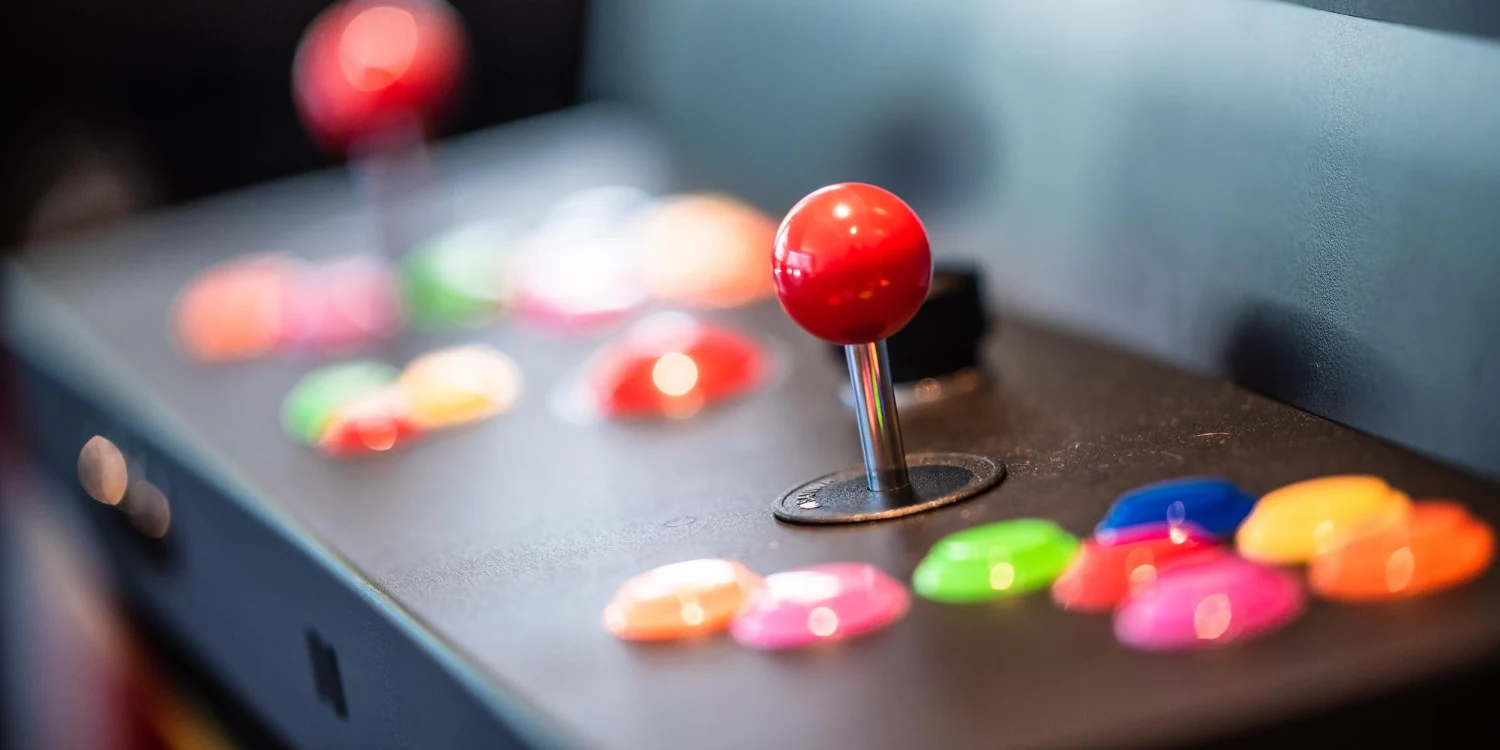
Pac-Man’s design is elegant and easy to understand. Players control Pac-Man using a joystick with four directions, guiding him through a maze filled with dots. The objective is simple: eat all dots while avoiding the ghosts. Special power pellets allow Pac-Man to temporarily turn the tables and chase the ghosts instead, earning bonus points. Additional fruit bonuses appear during each level, adding extra scoring opportunities.
As the game progresses:
- Ghosts move faster
- Power pellet effects become shorter
- Levels become increasingly difficult
Despite the simple controls, mastering Pac-Man requires careful movement, pattern recognition, and strategic timing. This balance of accessibility and challenge is one of the reasons Pac-Man remains the most famous maze game in history.
Pac-Man’s Cultural Impact
Pac-Man quickly expanded beyond arcades into popular culture. During the early 1980s, the game inspired:
- A Saturday morning cartoon series
- Hit merchandise including toys, clothing, and cereal
- Music singles and pop culture references
Pac-Man also became a competitive game. The perfect score of 3,333,360 points became a legendary achievement within the arcade community. The character has remained relevant for decades, appearing in modern titles such as Pac-Man 99 and crossover games across multiple platforms. Pac-Man is widely recognized as one of the most important and influential video games ever created.
Tips for Playing Pac-Man
Visitors playing Pac-Man at GamePlaza often try to beat each other’s high scores. Here are a few basic strategies:
- Use power pellets strategically
Save them when ghosts are nearby to maximize points. - Learn ghost movement patterns
Each ghost behaves differently, and experienced players learn how to predict them. - Use tunnels wisely
Side tunnels slow down ghosts, giving players a chance to escape. - Plan your routes
Clearing sections of the maze efficiently helps avoid getting trapped.
- Use power pellets strategically
With practice, players can develop patterns that allow them to survive longer and score higher.
Pac-Man’s Legacy
Pac-Man’s influence can still be seen across modern gaming. Many maze games, puzzle games, and mobile games borrow ideas from Pac-Man’s core design. The game helped define the early arcade industry and demonstrated that games could appeal to a broad audience. Today, Pac-Man is considered one of the most successful and recognizable video game characters of all time.
Museums like GamePlaza help preserve these classic machines so that new generations can experience them the way players did in the 1980s — standing at an arcade cabinet, joystick in hand, chasing the next high score.
Play Pac-Man at GamePlaza in Zurich
Visitors to GamePlaza Video Game Museum Zürich can experience Pac-Man on an original arcade machine as part of the museum’s interactive collection. With a single ticket, visitors receive two hours of unlimited play across dozens of classic arcade machines, consoles, PC games, and virtual reality experiences.
Whether you are rediscovering Pac-Man from your childhood or playing it for the first time, the experience remains just as exciting today as it was in 1980. Ready to chase your own high score? Play Pac-Man and many other classics at GamePlaza in Zurich.