
Gaming Museum in Zurich – Discover the History of Video Games, Arcades & Interactive Entertainment
Video games have shaped generations of players, inspired technological innovation, and become an important part of modern culture. From the earliest arcade cabinets to today’s immersive virtual reality experiences, gaming has evolved into one of the world’s most influential forms of entertainment. A gaming museum allows visitors to experience this remarkable journey by exploring the machines, consoles, and games that defined every era.
Unlike traditional museums where exhibits are viewed from behind glass, a modern gaming museum offers a highly interactive experience. Visitors can discover the history of video games while playing authentic arcade machines, classic home consoles, legendary pinball machines, retro computers, and iconic handheld systems. Every exhibit tells the story of how gaming technology, creativity, and innovation have evolved over more than five decades.
Located in Zurich, GamePlaza combines the atmosphere of a video game museum, an arcade museum, and an interactive entertainment center. Whether you are a lifelong gamer, a curious family, a tourist looking for unique things to do in Zurich, or someone introducing classic games to a new generation, you’ll discover hundreds of playable exhibits that celebrate gaming history in a fun and engaging way.
Throughout this guide, you’ll explore the evolution of video games, discover rare gaming collections, learn how classic consoles changed the industry, understand why game preservation matters, and find out why gaming museums continue to attract visitors from around the world.
What Is a Gaming Museum?
A gaming museum is a place dedicated to preserving, showcasing, and celebrating the history of video games and interactive entertainment. While many museums focus on art, science, or natural history, a video game museum explores how gaming has influenced technology, popular culture, education, and entertainment across generations.
Gaming museums often feature a wide variety of exhibits, including vintage arcade cabinets, retro game consoles, handheld gaming devices, classic computers, original game software, promotional materials, and gaming memorabilia. Many museums also document the evolution of hardware, game design, graphics, sound, and player experiences from the 1970s to today.
More Than a Traditional Museum
One of the biggest differences between a gaming museum and a traditional museum is interactivity. Instead of simply observing exhibits, visitors are encouraged to play many of the original machines. Experiencing a classic arcade cabinet or holding a vintage controller provides a deeper appreciation for how games were designed and why they became cultural icons.
Interactive exhibits also make gaming museums accessible to visitors of all ages. Older generations can revisit childhood favorites, while younger players can experience games that laid the foundation for modern titles. This combination of history and hands-on entertainment creates an experience that is both educational and enjoyable.
What Can You Expect to Find?
Although every museum has its own focus, a comprehensive gaming museum typically includes several major categories of exhibits:
- Playable arcade machines from different decades
- Classic home consoles from Nintendo, Sega, Atari, PlayStation, Xbox, and many other manufacturers
- Retro computer gaming systems
- Handheld consoles such as the Game Boy, Nintendo DS, PSP, and more
- Original pinball machines featuring both vintage and modern themes
- Temporary gaming exhibitions and themed displays
- Interactive experiences that allow visitors to play authentic games
Why Gaming Museums Matter
Video games represent much more than entertainment. They reflect advances in technology, storytelling, graphic design, music, and digital culture. As older hardware becomes increasingly difficult to maintain and many digital games disappear from commercial platforms, gaming museums play an essential role in preserving this history for future generations.
By restoring original machines, maintaining playable collections, and sharing the stories behind legendary games, museums help ensure that gaming history remains accessible to everyone—not just through photographs or videos, but through authentic hands-on experiences.
An Interactive Gaming Experience in Zurich
GamePlaza brings together many of these elements in one destination. Visitors can explore gaming history while enjoying playable arcade machines, retro consoles, classic pinball machines, virtual reality experiences, and rotating exhibitions. Rather than simply looking at displays, guests become part of the story by experiencing how gaming has evolved over the decades.
Whether you’re searching for a gaming museum in Zurich, a unique video game museum, or an interactive attraction for family and friends, a visit offers an entertaining way to discover the evolution of gaming—from the earliest arcade classics to today’s cutting-edge technology.
Continue reading to explore the fascinating history of video games and discover how one of the world’s largest entertainment industries began.

Explore the History of Video Games
The history of video games spans more than half a century of innovation, creativity, and technological progress. What began as simple experiments in computer laboratories has grown into a global industry enjoyed by billions of players. Understanding the history of video games helps us appreciate how today’s immersive experiences evolved from a handful of pioneering ideas and groundbreaking inventions.
Every generation of games introduced new technologies, memorable characters, and fresh ways to play. From the first arcade machines and home consoles to online multiplayer worlds and virtual reality, each milestone represents an important chapter in the evolution of gaming. Visiting a gaming museum allows players to experience many of these milestones firsthand by playing the original hardware that shaped gaming history.
The First Video Games
The origins of video games can be traced back to the 1950s and 1960s, when researchers began experimenting with interactive computer programs. One of the earliest examples was Tennis for Two (1958), followed by Spacewar! (1962), which became one of the first influential digital games.
Although these early projects were created for research and experimentation rather than commercial entertainment, they demonstrated that computers could provide interactive experiences. These innovations laid the foundation for the video game industry that would emerge in the following decades.
The Arcade Revolution of the 1970s
The 1970s marked the beginning of commercial video gaming. Arcade machines appeared in shopping centers, amusement halls, restaurants, and entertainment venues, allowing players to compete for high scores using coin-operated cabinets.
The release of iconic titles such as Pong, Space Invaders, Asteroids, and Pac-Man transformed arcade gaming into a worldwide phenomenon. Arcades became social gathering places where players challenged friends, shared strategies, and competed for the top position on the leaderboard.
Many original arcade cabinets from this era are still fully playable today in gaming museums, offering visitors the authentic experience that defined an entire generation of gamers.
The Rise of Home Consoles
As technology improved, video games moved from public arcades into people’s homes. Early home consoles introduced families to interactive entertainment without requiring a trip to the arcade.
Throughout the 1980s and 1990s, manufacturers released increasingly powerful systems that featured better graphics, richer sound, and more complex gameplay. Companies such as Nintendo, Sega, Atari, Sony, and later Microsoft helped shape the competitive console market that continues today.
Many legendary franchises that remain popular today first appeared during this era, creating characters and worlds that have become part of global popular culture.
The Golden Age of PC Gaming
While consoles dominated living rooms, personal computers opened new possibilities for developers. PC gaming introduced genres that flourished because of the flexibility and power of computer hardware, including real-time strategy games, simulation titles, role-playing games, and online multiplayer experiences.
Advances in graphics cards, sound technology, networking, and game engines allowed developers to create increasingly ambitious worlds that expanded what video games could achieve.
Online Gaming Changes Everything
The widespread adoption of the internet fundamentally changed how people played games. Instead of competing only against friends sitting nearby, players could connect with opponents and teammates from around the world.
Online gaming transformed multiplayer experiences, encouraged the growth of esports, and created massive gaming communities that continue to influence game development today. Digital distribution platforms also made it easier than ever for players to access thousands of games without purchasing physical media.
The Modern Era of Gaming
Today’s gaming industry combines decades of technological innovation with advances in artificial intelligence, realistic graphics, cloud computing, and immersive virtual reality. Modern games feature cinematic storytelling, expansive open worlds, cross-platform multiplayer, and accessibility options that allow more people than ever to enjoy interactive entertainment.
Despite these innovations, many modern developers continue to draw inspiration from classic arcade games, retro consoles, and pioneering game designers. The ideas introduced decades ago still influence gameplay mechanics, level design, and storytelling across the industry.
A Timeline of Gaming Innovation
- 1950s–1960s: Early computer experiments and prototype video games.
- 1970s: The birth of commercial arcade gaming and the first home consoles.
- 1980s: Rapid growth of arcades, Nintendo Entertainment System, Sega, and personal computer gaming.
- 1990s: The transition to 3D graphics, CD-based consoles, and online multiplayer begins.
- 2000s: Broadband internet, motion controls, digital downloads, and competitive online gaming.
- 2010s: Streaming, esports, indie game development, and the resurgence of retro gaming.
- Today: Virtual reality, cloud gaming, artificial intelligence, and immersive interactive experiences.
Experience Gaming History Yourself
Reading about gaming history is fascinating, but playing the original machines offers a completely different perspective. Feeling the weight of an authentic arcade joystick, using a classic console controller, or hearing the unmistakable sounds of vintage hardware creates a connection that cannot be replicated through videos or photographs.
At GamePlaza, visitors can experience many of these historic systems in action. Instead of viewing gaming history from a distance, you become part of it by playing the machines that helped shape one of the world’s most influential entertainment industries.
Next, discover how gaming museums preserve these incredible machines and why video game preservation has become essential for protecting gaming history for future generations.
Explore Our Gaming Collections & Interactive Exhibitions
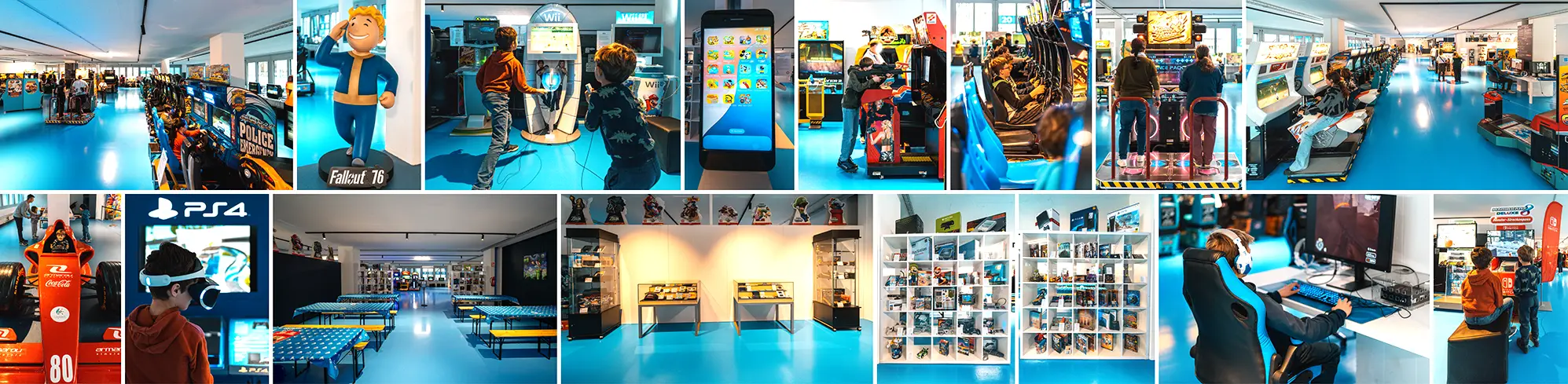
A great gaming museum is more than a place to look at old machines—it’s a place where gaming history comes to life. At GamePlaza, visitors can explore interactive exhibitions featuring authentic arcade machines, legendary home consoles, handheld systems, pinball machines, retro PCs, and modern virtual reality experiences. Every exhibit represents an important chapter in the evolution of gaming, allowing visitors to discover how technology, creativity, and entertainment have changed over the decades.
Unlike traditional museums where artifacts remain behind glass, many of the exhibits at GamePlaza are fully playable. Whether you want to relive childhood memories, introduce classic games to a younger generation, or simply experience the origins of modern gaming, every visit offers something new to discover.
Arcade Machines – Where Gaming Became Social
Long before online multiplayer and home consoles, arcades were the heart of the gaming community. Players gathered around brightly lit cabinets to compete for high scores, challenge friends, and experience the latest technological innovations. These coin-operated machines introduced generations of gamers to unforgettable classics and transformed video games into a worldwide cultural phenomenon.
At GamePlaza, visitors can experience original arcade machines spanning multiple decades. From timeless classics to lesser-known gems, every cabinet tells part of the story of arcade gaming and its influence on today’s games. Playing these machines offers an authentic experience that cannot be replicated by modern emulators.
Discover our Arcade Machines collection →
Home Consoles – The Evolution of Living Room Gaming
Home consoles changed the way people played games by bringing interactive entertainment into millions of households. Beginning with early systems in the 1970s and continuing through Nintendo, Sega, PlayStation, Xbox, and many others, each generation introduced new technology, iconic franchises, and unforgettable gaming experiences.
GamePlaza showcases consoles from different eras, allowing visitors to see how graphics, controllers, storage media, and gameplay evolved over time. From cartridge-based systems to modern high-definition consoles, the collection highlights the incredible pace of innovation within the gaming industry.
Handheld Gaming – Entertainment Anywhere
Portable gaming revolutionized the industry by allowing players to enjoy their favorite games wherever they were. Devices such as the Game Boy, Nintendo DS, PlayStation Portable (PSP), PlayStation Vita, and Sega Game Gear made gaming more accessible than ever before.
The handheld collection celebrates the creativity and engineering behind these compact systems while showcasing how portable gaming continues to influence modern devices and mobile entertainment.
Pinball Machines – Mechanical Classics That Never Go Out of Style
Pinball combines mechanical engineering, fast reflexes, and timeless design into one of the most enduring forms of interactive entertainment. Long before digital graphics dominated the industry, pinball machines captivated players with flashing lights, immersive themes, and skill-based gameplay.
GamePlaza features a diverse collection of classic and modern pinball machines, including popular titles from leading manufacturers such as Stern Pinball. Each machine showcases unique artwork, sound design, and gameplay mechanics that continue to attract players of all ages.
PC Gaming – From DOS Classics to Modern Computing
Personal computers opened entirely new possibilities for game developers. From early DOS adventures and strategy games to modern online multiplayer titles, PC gaming has continually pushed the boundaries of graphics, simulation, and player creativity.
The museum’s PC gaming exhibits highlight important milestones in computer gaming history, demonstrating how improvements in processors, graphics cards, networking, and software development shaped the industry we know today.
Explore the History of PC Gaming →
Virtual Reality – The Next Generation of Interactive Entertainment
Virtual reality represents one of the most exciting developments in modern gaming. By combining immersive visuals, motion tracking, and interactive gameplay, VR creates experiences that place players directly inside virtual worlds.
At GamePlaza, visitors can discover how gaming has evolved from simple two-dimensional screens to immersive virtual reality experiences. Exploring both classic and modern technologies in one location offers a unique perspective on how innovation continues to shape the future of interactive entertainment.
A Collection That Continues to Grow
Gaming history is constantly evolving, and so is the museum’s collection. New exhibits, rotating displays, restored machines, and special themed exhibitions ensure that every visit offers something different. Whether you’re interested in retro gaming, arcade culture, console history, or the latest innovations in virtual reality, there’s always another story waiting to be discovered.
Together, these collections form a living timeline of interactive entertainment, preserving the games, machines, and memories that have inspired generations of players around the world.
Next, discover the technology behind video games and learn how decades of hardware innovation transformed simple electronic experiments into today’s immersive gaming experiences.
Discover the Technology Behind Video Games
The history of gaming is also a history of technological innovation. Every generation of video games has been shaped by advances in hardware, software, graphics, sound, storage, and display technology. From the simple electronic circuits inside the earliest arcade machines to today’s powerful gaming systems and immersive virtual reality hardware, technology has continually changed what games can do.
Exploring gaming technology helps explain why video games have evolved so dramatically over the decades. A classic arcade machine, an early home console, a retro computer, and a modern gaming system may look completely different, but they all represent important steps in the development of interactive entertainment.
From Simple Electronics to Interactive Entertainment
The earliest video games were created with extremely limited computing power. Developers had to work within strict technical limitations, using simple graphics, basic sound, and carefully optimized code to create engaging experiences. Despite these limitations, early games demonstrated the enormous potential of interactive entertainment.
Arcade machines were particularly important because they combined specialized hardware with dedicated controls and displays. Each cabinet was designed around a specific gaming experience, with joysticks, buttons, steering wheels, light guns, trackballs, or other control systems allowing players to interact directly with the game.
The Evolution of Gaming Hardware
As technology became more affordable and powerful, gaming hardware evolved rapidly. Home consoles introduced increasingly capable processors, improved graphics, better sound, and larger storage capacities. Personal computers provided developers with even greater flexibility, while dedicated graphics hardware eventually enabled increasingly realistic three-dimensional environments.
Storage technology also changed dramatically. Early games were distributed on cartridges and floppy disks before moving to optical discs and, eventually, digital downloads. Each transition allowed developers to create larger and more complex games while changing how players purchased, stored, and accessed their collections.
- Arcade hardware: Dedicated machines designed for specific interactive experiences.
- Cartridges: Removable game media used by many classic consoles.
- Floppy disks: An important form of software distribution during the early PC gaming era.
- CD-ROMs: Greater storage capacity enabled larger games, music, video, and cinematic content.
- DVD and Blu-ray: Expanded storage for later generations of console games.
- Digital distribution: Games could increasingly be downloaded without physical media.
- Solid-state storage: Modern systems use fast storage technology to reduce loading times and handle increasingly large game worlds.
Graphics Technology and the Move to 3D
One of the most visible changes in gaming technology has been the evolution of graphics. Early games relied on simple shapes, sprites, and limited color palettes. As processors and graphics hardware became more powerful, developers could create detailed environments, animated characters, lighting effects, and eventually fully three-dimensional worlds.
The transition from 2D to 3D during the 1990s represented a major turning point. Games could now offer new perspectives, larger environments, and more complex forms of interaction. Modern graphics technology has continued this evolution with high-resolution displays, real-time lighting, advanced physics, and increasingly realistic virtual environments.
Controllers and New Ways to Play
Gaming technology is not limited to processors and graphics. The way players interact with games has also evolved significantly. Simple joysticks and buttons were followed by directional pads, analog sticks, pressure-sensitive controls, motion controllers, touchscreens, cameras, microphones, and other forms of input.
These developments have allowed games to become more accessible and interactive. Motion controls can translate physical movement into gameplay, while modern VR controllers allow players to interact with objects inside virtual environments.
Sound and Audio Technology
Sound has always played an important role in gaming. Early systems were capable of producing only simple electronic tones, but developers learned to use these limitations creatively. Iconic melodies and sound effects became an essential part of the identity of many classic games.
Modern gaming systems can reproduce complex musical scores, realistic environmental sounds, voice performances, and spatial audio. The evolution from simple electronic beeps to immersive three-dimensional sound demonstrates just how far gaming technology has progressed.
Arcade Technology and Dedicated Game Machines
Arcade machines remain some of the most fascinating examples of specialized gaming technology. Unlike modern consoles that can run thousands of different games, many classic arcade cabinets were designed around a single game or experience.
Their hardware could include custom circuit boards, specialized displays, unique control mechanisms, speakers, coin mechanisms, and physical components designed specifically for the game. Racing games, for example, could use steering wheels and pedals, while shooting games could incorporate light guns or other specialized controllers.
This combination of software and physical hardware made arcade gaming a uniquely immersive form of entertainment and helped establish many of the conventions still used in modern games.
From Retro Hardware to Modern Gaming Systems
Looking at retro hardware alongside modern systems reveals how dramatically the technology has changed. A machine that once required dedicated hardware to display a simple game can now be surpassed by devices small enough to fit in a pocket.
Yet older technology remains important. Many classic games were designed specifically around the limitations of their original hardware, and experiencing them on authentic equipment can provide a better understanding of the design decisions made by their creators.
This is one reason gaming museums preserve original consoles, computers, arcade machines, controllers, and other hardware. These objects are not simply old electronics—they are physical records of technological innovation and the history of interactive entertainment.
Technology Continues to Shape the Future of Gaming
Gaming technology continues to evolve through developments such as virtual reality, cloud gaming, artificial intelligence, high-performance graphics, faster networking, and new forms of interactive hardware. The next generation of gaming experiences will likely continue to blur the boundaries between physical and digital environments.
By exploring gaming technology across different generations, visitors can see that today’s sophisticated gaming experiences did not appear overnight. They are the result of decades of experimentation, engineering, creativity, and innovation.
To understand why these technologies and games need to be protected, the next part of our guide explores video game preservation and the important role museums play in keeping gaming history alive.

Why Video Game Preservation Matters
Video games are an important part of modern cultural history. They reflect the technology, creativity, design, music, storytelling, and social trends of the generations that created and played them. Yet unlike many traditional cultural artifacts, video games can be surprisingly difficult to preserve. Hardware becomes obsolete, physical media deteriorates, and software can become difficult or even impossible to access as technology changes.
Video game preservation helps protect this history by maintaining games, hardware, documentation, artwork, and other materials for future generations. Gaming museums and dedicated collections play an important role in this process by keeping original systems and games accessible and providing a place where visitors can experience them.
Why Are Video Games Difficult to Preserve?
A video game is more than the software itself. To experience many classic games as they were originally intended, you may need the original console or computer, controllers, display technology, storage media, operating system, and other specialized hardware.
As these components age, maintaining an authentic gaming experience becomes increasingly challenging. A game stored on an old cartridge may still physically exist, but the hardware required to play it may no longer be manufactured or readily available.
Some of the challenges of preserving video games include:
- Aging hardware: Electronic components can fail or become increasingly difficult to replace.
- Obsolete technology: Older systems may require displays, connectors, or accessories that are no longer commonly available.
- Physical deterioration: Cartridges, discs, magnetic media, and other storage formats can degrade over time.
- Software compatibility: Older games may depend on operating systems or hardware that modern computers cannot easily reproduce.
- Digital distribution: Some games exist primarily as digital products and may disappear when online services or storefronts are discontinued.
- Missing documentation: Information about how older games and hardware were created can become difficult to locate.
Preserving the Original Hardware
One of the most valuable aspects of a gaming archive is the preservation of original hardware. Consoles, arcade cabinets, computers, controllers, and accessories provide physical evidence of how gaming technology developed.
Original hardware also allows visitors to experience games in the context for which they were designed. The feel of an original controller, the display characteristics of a vintage system, and the physical controls of an arcade machine can all contribute to the experience.
For this reason, preserving gaming hardware is about more than keeping old electronics in storage. It is about maintaining the connection between the technology and the experiences it made possible.
Preserving Retro Games
Classic games can be preserved in several ways. Physical copies may be carefully stored, while digital versions can be archived for research and future access. Hardware can also be maintained or restored so that original games remain playable.
Preservation does not necessarily mean that every game must remain unchanged forever. Instead, it involves documenting and protecting the original materials while finding responsible ways to ensure that future generations can study and experience them.
The Role of a Gaming Archive
A gaming archive can contain much more than games themselves. Magazines, advertisements, manuals, packaging, development materials, photographs, promotional items, controllers, arcade cabinets, and other memorabilia can help document the wider history of gaming.
These materials provide valuable context. A console tells us about the technology of its time, while its packaging and advertising can reveal how the product was presented to consumers. Game manuals can show how developers explained new mechanics, while magazines can reveal what players and critics thought about games when they were originally released.
Gaming Preservation as Cultural Heritage
As video games have become a major form of global entertainment, their cultural importance has also grown. Games have influenced movies, music, art, technology, education, and popular culture. They have also created communities and shared experiences across generations.
Preserving video games therefore means preserving a part of modern cultural heritage. Future researchers, designers, historians, and players should be able to understand how interactive entertainment developed and why certain games became influential.
Keeping Gaming History Playable
There is an important difference between preserving an object and preserving an experience. A classic arcade cabinet can be carefully stored, but allowing visitors to play it creates a direct connection with the original experience.
Playable collections provide an opportunity to understand gaming history through interaction. Visitors can discover how difficult an early game was, experience the physical controls of an arcade machine, compare different generations of consoles, and understand how game design changed as technology advanced.
This hands-on approach makes gaming preservation accessible to people who may not consider themselves historians or technology enthusiasts. Instead of simply reading about the past, visitors can experience it themselves.
Preserving Gaming History for Future Generations
The technology used to create and play games will continue to change. New consoles, computers, displays, storage formats, and digital platforms will eventually become part of history themselves. The work of preserving today’s games will therefore be just as important as preserving the games of previous generations.
Gaming museums can help bridge the gap between generations by bringing together historic hardware, software, collections, and interactive experiences in one place. A child discovering a classic arcade game today may experience the same excitement that an earlier generation felt when that game was first released.
At GamePlaza, the preservation of gaming history is closely connected to the visitor experience. By bringing classic games and machines together in an interactive environment, visitors can explore the evolution of gaming while experiencing the technology that made it possible.
Continue exploring the world of gaming with our guide to gaming exhibitions, or return to the history of video games to discover how these technologies and experiences evolved over the decades.
Retro Gaming: From Classic Games to Modern Nostalgia
Retro gaming is more than simply playing old video games. It is a way of experiencing the games, consoles, arcade machines, and technology that helped shape the gaming industry. From classic arcade cabinets and early home consoles to iconic handheld systems and retro computers, these games continue to attract new generations of players while bringing back memories for those who grew up with them.
At a gaming museum, retro gaming provides a unique opportunity to experience the past directly. Instead of watching videos or looking at screenshots, visitors can sit in front of an original machine, pick up a classic controller, and play the games as they were originally designed.
What Is Retro Gaming?
Retro gaming generally refers to playing and collecting older video games and gaming hardware. The definition of “retro” can vary, but it commonly includes arcade games, classic consoles, handheld systems, and computer games from earlier generations of the gaming industry.
For many players, retro gaming includes systems and games from the 1970s, 1980s, 1990s, and early 2000s. This period covers some of the most important developments in gaming, including the rise of arcades, the growth of home consoles, the transition from 2D to 3D graphics, and the beginning of widespread online gaming.
Why Are Retro Games Still Popular?
One reason retro games remain popular is their simplicity. Many classic games are easy to understand but difficult to master. Players can often learn the basic controls within seconds, while mastering the gameplay can take hours of practice.
Retro games also offer a different experience from many modern titles. Instead of enormous open worlds and complex progression systems, classic games often focus on a small number of carefully designed mechanics. High scores, short levels, competitive multiplayer, and immediate feedback make many retro games easy to pick up and play.
For older players, retro gaming can also provide a connection to childhood memories. Playing a familiar game on original hardware can recreate the sounds, controls, and atmosphere of an earlier period in gaming history.
Classic Arcade Gaming
Arcade machines are at the heart of retro gaming culture. During the golden age of arcades, players gathered in dedicated gaming venues, entertainment centers, restaurants, and shopping areas to compete for high scores and discover the latest games.
Classic arcade games introduced many gameplay ideas that remain influential today. Fast-paced action, competitive scoring, recognizable characters, specialized controls, and multiplayer experiences all became important parts of gaming culture.
Playing an original arcade machine provides an experience that modern home systems cannot completely reproduce. The physical cabinet, joystick, buttons, display, sound system, and controls were all designed as part of a single experience.
Explore more of the history and technology behind these machines in our Arcade Machines Guide.
Retro Consoles and Classic Games
The growth of home consoles brought retro gaming from public arcades into living rooms around the world. Systems from companies such as Nintendo, Sega, Atari, Sony, and other manufacturers introduced millions of players to interactive entertainment at home.
Classic consoles also helped establish many gaming genres and franchises that remain popular today. Platform games, racing games, fighting games, role-playing games, sports titles, and adventure games all evolved significantly during the early generations of home gaming.
Exploring these systems side by side makes it possible to see how quickly console technology developed. Improvements in processors, graphics, sound, controllers, and storage allowed each generation to create new types of gaming experiences.
Explore the history of classic gaming consoles →
The Social Experience of Retro Gaming
One of the most enjoyable aspects of retro gaming is its social nature. Many classic arcade and console games were designed around competition and cooperation. Friends could challenge each other to a racing game, fight for the highest score, or play together on the same screen.
This makes retro gaming particularly suitable for groups. Instead of everyone playing separately on their own devices, arcade machines and classic multiplayer games encourage people to interact, compete, and share the experience.
This social element is one reason retro gaming works so well for family visits, birthday parties, corporate events, school activities, and other group experiences.
Bring Retro Gaming to Your Event
You don’t have to visit a gaming museum to enjoy the atmosphere of classic gaming. With arcade machine rental and game machine rental services, retro gaming can also become part of your own event.
Arcade machines and pinball machines can transform an ordinary event into an interactive entertainment experience. Guests can compete against each other, discover classic games, and enjoy a different form of entertainment that works for both dedicated gamers and casual players.
GamePlaza offers gaming equipment rental for events and special occasions, making it possible to bring the excitement of arcade gaming beyond the museum.
Arcade Machine & Game Machine Rental
Arcade machine rental is a flexible entertainment option for events that need something more interactive than traditional activities. Depending on the event, machines can be used as a central attraction or as additional entertainment that guests can enjoy throughout the day.
Game machine rental can be suitable for a wide range of occasions, including:
- Birthday parties
- Corporate events
- Team-building activities
- Trade shows and exhibitions
- Private celebrations
- Festivals and public events
- School and community events
- Gaming-themed parties
- Company anniversaries
- Entertainment areas at larger events
What Gaming Machines Can You Rent?
Depending on your event and available space, rental options can include classic arcade machines, pinball machines, and other gaming equipment. Different types of machines can also be combined to create a larger retro gaming area.
Arcade machines are particularly effective when you want to create a social atmosphere. Guests can compete for high scores, challenge friends, or simply discover games they may never have played before.
Pinball machines provide another type of interactive entertainment, combining physical controls, lights, sounds, and fast-paced gameplay in a format that works well for both casual and experienced players.
Discover Game Machine Rental options →
Retro Gaming for Events, Parties & Businesses
Retro gaming can work for almost any event where people need an engaging activity. For a birthday party, an arcade machine can become the centerpiece of the entertainment. For a corporate event, games can encourage friendly competition between colleagues. At an exhibition or trade show, an unusual gaming experience can also help attract visitors to your booth or event space.
The flexibility of game machine rental means that the experience can be adapted to different audiences, venues, and event sizes. A single arcade cabinet can create a nostalgic focal point, while several machines can transform an entire area into a temporary arcade.
For businesses and event organizers, retro gaming also offers something that many conventional entertainment options lack: an experience that encourages participation. Instead of simply watching entertainment, guests actively become part of it.
Experience Retro Gaming at GamePlaza
Whether you are interested in classic arcade games, retro consoles, pinball, handheld systems, or vintage computer gaming, retro gaming offers a direct connection to the history of interactive entertainment.
At GamePlaza, visitors can experience gaming across multiple generations in one location. From classic arcade machines to consoles and modern interactive experiences, the collection shows how gaming has evolved while demonstrating why many older games remain enjoyable decades after their original release.
And if you want to bring that experience somewhere else, GamePlaza’s game machine rental service can help turn your next event into a temporary retro gaming experience.

Why Visit GamePlaza?
A gaming museum is more than a collection of old games and machines. It is a place where technology, entertainment, and memories come together. At GamePlaza in Zurich, visitors can explore the history of video games while experiencing classic and modern gaming for themselves.
Whether you are a lifelong gamer, a family looking for something different to do, a tourist exploring Zurich, or a group planning an event, GamePlaza offers an interactive experience that brings several generations of gaming together under one roof.
Experience Gaming History, Not Just Read About It
Books, photographs, and online videos can tell you about the history of video games, but playing the original machines provides a completely different experience. At GamePlaza, visitors can interact with gaming hardware and discover how games were played across different generations.
From classic arcade machines and retro consoles to pinball, handheld gaming, PC gaming, and virtual reality, the experience provides a journey through the evolution of interactive entertainment.
Something for Different Generations
Gaming has changed dramatically over the decades, but its ability to bring people together has remained the same. Parents can introduce children to games they played when they were younger, while younger visitors can discover the origins of gaming technologies they use today.
This makes GamePlaza suitable for multiple generations. Experienced gamers can revisit classic favorites, while people who are less familiar with gaming can discover the history and technology behind one of the world’s most popular forms of entertainment.
A Hands-On and Interactive Museum Experience
The interactive nature of GamePlaza is one of the key differences between a traditional museum visit and a gaming museum experience. Instead of simply looking at exhibits, visitors can engage with many of the machines and games.
Playing an arcade cabinet, using a classic console controller, trying a pinball machine, or experiencing virtual reality creates a more memorable connection with gaming history. The result is an experience that combines education with entertainment.
A Unique Thing to Do in Zurich
If you are looking for something different to do in Zurich, a gaming museum offers an alternative to traditional sightseeing. It can be an interesting destination for local residents as well as visitors who want to experience something beyond the city’s more conventional attractions.
GamePlaza combines gaming history, interactive entertainment, retro culture, and modern technology in one destination. It can be enjoyed as a standalone activity or as part of a wider day exploring Zurich.
Perfect for Families, Friends and Groups
Gaming is naturally social, making an interactive gaming museum a great destination for groups. Friends can compete for high scores, families can discover classic games together, and groups can share experiences across different generations.
GamePlaza can also accommodate organized visits and special occasions, including birthday parties, school visits, corporate events, and team activities.
Plan Your Visit to GamePlaza
Whether you want to rediscover the games of your childhood, explore the history of video games, challenge your friends at an arcade machine, or experience modern virtual reality, GamePlaza offers an opportunity to experience gaming history in an interactive environment.
Discover the collection, explore different generations of gaming, and create your own memories at one of Zurich’s unique gaming attractions.
Frequently Asked Questions About Gaming Museums
What is a gaming museum?
A gaming museum is a museum dedicated to the history, technology, culture, and development of video games and interactive entertainment. Exhibits can include arcade machines, consoles, computers, handheld systems, pinball machines, games, memorabilia, and other gaming-related artifacts. Many modern gaming museums also provide interactive exhibits that allow visitors to play the games.
Is there a gaming museum in Zurich?
Yes. GamePlaza is a gaming museum and interactive gaming attraction in Zurich where visitors can explore different generations of video games, arcade machines, consoles, pinball, PC gaming, handheld systems, and modern gaming experiences.
Can you play the games in a gaming museum?
At an interactive gaming museum such as GamePlaza, visitors can play many of the games and machines on display. This hands-on approach allows visitors to experience gaming history rather than simply viewing exhibits.
What can you see at GamePlaza?
GamePlaza features a variety of gaming experiences and exhibits, including arcade machines, classic consoles, handheld gaming systems, pinball machines, PC gaming, retro games, and virtual reality experiences. The collection brings together different generations of interactive entertainment in one location.
Is GamePlaza suitable for children?
Gaming museums can be enjoyed by visitors of different ages, and GamePlaza offers an interactive environment where families can discover games together. Parents can introduce children to classic games while younger visitors can explore the technology and experiences that shaped modern gaming.
Is a gaming museum suitable for adults?
Absolutely. Gaming museums appeal to adults who grew up with classic arcade games, retro consoles, computers, and pinball machines, as well as visitors who are interested in technology and gaming history. Retro gaming can also provide a nostalgic experience for adults who want to revisit games from their childhood.
How long does it take to visit a gaming museum?
The ideal visit length depends on how many exhibits you want to explore and play. Visitors interested in gaming history may want to spend several hours discovering different machines and generations, while others may prefer a shorter visit focused on their favorite games and systems.
Does GamePlaza have arcade machines?
Yes. Arcade machines are an important part of the GamePlaza experience. Visitors can discover classic arcade gaming and experience the dedicated cabinets, controls, and gameplay that helped establish video games as a global form of entertainment.
Does GamePlaza have pinball machines?
Yes. Pinball is part of the gaming experience at GamePlaza. Pinball machines combine mechanical gameplay, physical controls, lights, sound, and themed artwork, making them an important part of interactive entertainment history.
Can I experience virtual reality at GamePlaza?
GamePlaza includes modern interactive gaming experiences alongside its classic and retro collection. Virtual reality demonstrates how gaming technology has evolved from early arcade machines and consoles into immersive digital environments.
Can I visit GamePlaza with a group?
Yes. A gaming museum can be a fun destination for groups of friends, families, schools, companies, and other organizations. Interactive games also make the experience naturally suitable for group activities and friendly competition.
Can I rent arcade machines for an event?
Yes. GamePlaza also offers game machine rental for events and special occasions. Depending on availability and requirements, arcade machines and other gaming equipment can be used for birthday parties, corporate events, exhibitions, private celebrations, and other occasions.
Why visit a gaming museum instead of playing games at home?
A gaming museum offers something that playing at home cannot completely reproduce: the physical and historical context of the original machines. Visitors can experience authentic arcade cabinets, classic hardware, specialized controls, and games from different generations while sharing the experience with other people.
Where is GamePlaza located?
GamePlaza is located in Zurich, Switzerland. Visitors can check the current address, opening hours, ticket information, and directions on the official Visit GamePlaza page before planning their trip.