
Game Console
Xbox 360
The Xbox 360 is a home video game console developed by Microsoft and released in 2005 as the successor to the original Xbox. It was one of the defining systems of the seventh generation of home consoles and competed mainly with the PlayStation 3 and Nintendo Wii. The Xbox 360 became especially important because it helped Microsoft establish Xbox as a long-term global console brand.
The console is significant because it combined strong online services, a broad software library, multimedia features, and major first-party franchises into one platform. It also played a major role in shaping modern console gaming through achievements, digital distribution, downloadable content, and online multiplayer culture.
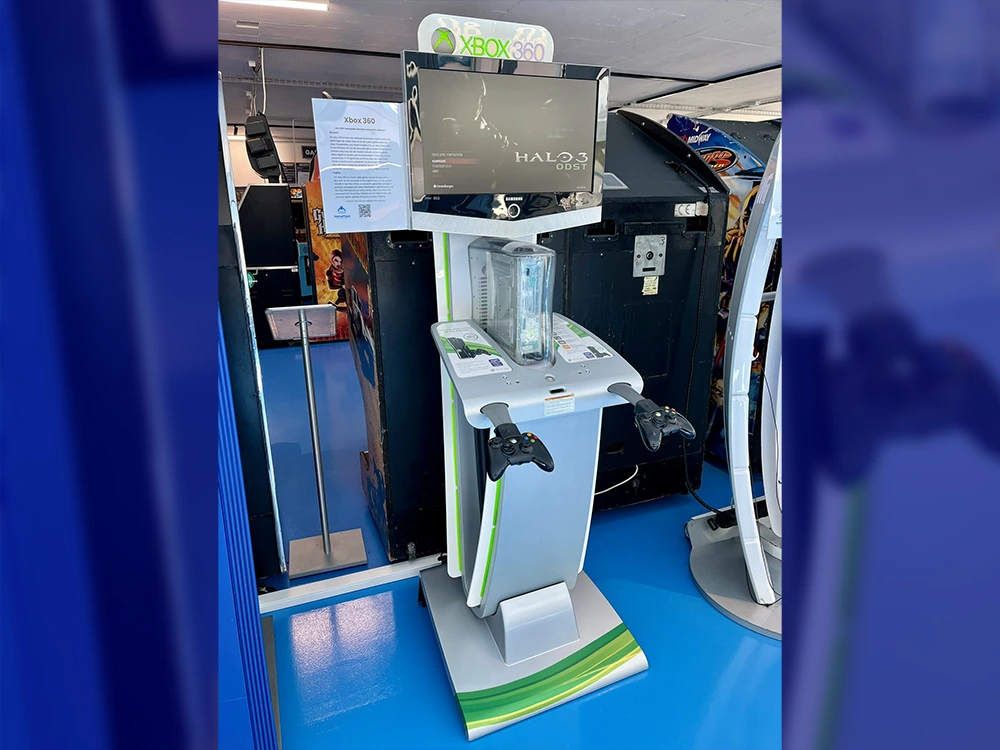
How to Choose and Change Games
The Xbox 360 supports both physical and digital games. Players can insert a game disc into the console or launch a downloaded title from the dashboard. This gave users a flexible mix of boxed software and digital access, especially as online marketplaces became more important during the generation.
To change games, the current disc can be ejected and replaced with another one, or players can return to the menu and launch a different installed digital title. This made the console part of the broader transition from physical-only gaming toward a hybrid physical-and-digital model.
- Insert a disc to play a physical game.
- Select an installed title to play digitally.
- Eject the current disc before inserting another one.
- Return to the dashboard to switch digital titles.
- Some games may require installation, updates, or downloadable content.
Game Library
The Xbox 360 built one of the strongest and most influential libraries of its generation. Its catalog included first-party Microsoft titles, major third-party releases, sports games, shooters, role-playing games, racing games, fighting games, and a large number of downloadable arcade and indie-style titles. This wide range made the platform attractive to many different kinds of players.
The console became especially known for action-heavy and online-focused games, but it also supported a much broader software ecosystem than that reputation alone suggests. Through Xbox Live Arcade and downloadable content, the Xbox 360 helped expand the idea of what a console game library could be.
- Supported a broad seventh-generation software library.
- Included first-party, third-party, and downloadable titles.
- Known especially for shooters, racing games, and online play.
- Helped popularize digital downloadable games on consoles.
- Remains highly regarded for the strength of its overall library.
Most Popular Games
Several games became especially associated with the Xbox 360 because they helped define the platform and its reputation during the generation.
- Halo 3 – One of the console’s most important exclusives and a major landmark in online console gaming.
- Gears of War – A defining Xbox franchise that helped shape the system’s identity.
- Forza Motorsport series – Important racing titles that strengthened the Xbox brand.
- Call of Duty 4: Modern Warfare – One of the games most closely linked to the rise of online multiplayer culture on the platform.
- Minecraft – A later but hugely important title that reached a wide audience on Xbox 360.
These games mattered because they reflected the Xbox 360’s main strengths: online play, strong first-party support, wide genre appeal, and major influence on multiplayer gaming culture.
History
The Xbox 360 was released in 2005 and gave Microsoft an early start in the seventh console generation. This early launch helped the company build momentum before some of its main competitors arrived. The system quickly became an important platform in North America, Europe, and other key markets.
Its history includes both major successes and notable challenges. On one hand, the console became a major commercial and cultural success, especially through Xbox Live and blockbuster games. On the other hand, it was also affected by the well-known hardware reliability problems associated with the “Red Ring of Death,” which became one of the most discussed issues in console history.
- Released in 2005 as the successor to the original Xbox.
- Part of the seventh generation of home consoles.
- Launched earlier than some major competitors.
- Helped establish Xbox as a long-term global brand.
- Was affected by major hardware reliability issues during part of its life cycle.
Hardware
The Xbox 360 was designed as a powerful HD-era home console with support for optical discs, digital downloads, online connectivity, and multimedia functions. It introduced a more modern visual and online identity for Microsoft hardware and became strongly associated with wireless controllers and Xbox Live services.
Over time, the Xbox 360 family expanded into multiple hardware revisions, including redesigned models that improved the system’s physical design and reliability. These revisions helped the platform remain commercially active for many years.
- Built as an HD-era home console.
- Supports optical discs, downloads, and online connectivity.
- Known for its wireless controllers and Xbox Live integration.
- Released in multiple hardware revisions over time.
- Helped define Microsoft’s modern console hardware identity.
Market Impact
The Xbox 360 had major commercial success and became one of Microsoft’s most important gaming platforms. Lifetime sales are widely reported at approximately 84 million units worldwide, making it one of the best-selling home consoles of its generation and one of the most commercially successful Xbox systems ever released.
These sales figures are especially important because they show how strongly Microsoft expanded its position in the global console market during this era. The Xbox 360 sold on a scale large enough to support a major software ecosystem, a strong online network, and long-term brand growth for Xbox.
- About 84 million units sold worldwide over its lifetime.
- Became one of the best-selling consoles of the seventh generation.
- Was one of Microsoft’s most commercially successful gaming platforms.
- Built a large enough installed base to support major software and online services.
- Played a central role in the long-term growth of the Xbox brand.
Because of this, the Xbox 360’s market impact is best understood through its strong hardware sales. Its large installed base gave Microsoft a major position in the console market and helped shape the company’s gaming future.
Fun Facts
The Xbox 360 is especially memorable because it was the system that defined Xbox for an entire generation of players. For many people, it remains the console most closely tied to the rise of online multiplayer gaming on home systems.
- It was the successor to the original Xbox.
- It helped make Xbox Live a major force in console gaming.
- It became strongly associated with achievements and online play.
- It introduced several famous Xbox-era franchises to a wider audience.
- It remains one of the most iconic consoles in Microsoft history.
The Xbox 360 represents one of the most important chapters in modern gaming history, combining major sales success, a powerful software library, and a lasting influence on online console culture. With its strong commercial performance and major role in shaping the Xbox brand, it remains one of the defining systems of its era. If you would like to explore that story more closely, visit Gameplaza in Altstetten, Zurich, where the Xbox 360 can be discovered as part of a wider journey through the past, present, and future of video games.
Important Info
| Developer: | Microsoft |
| Manufacturer: | Flextronics, Wistron, Celestica, Foxconn |
| Product family: | Xbox |
| Type: | Home video game console |
| Generation: | Seventh |
| Release date: | November 22, 2005 |
| Introductory price: | US$299, €299, £209 (Xbox 360 Core) US$399, €399, £279 (Xbox 360 20 GB) |
| Discontinued: | WW: April 20, 2016 |
| Units sold: | Worldwide: 84 million (as of June 9, 2014) |
| Media: | DVD, CD, digital distribution Add-on: HD DVD (discontinued) |
| Operating system: | Xbox 360 system software |
| System on a chip: | XCGPU (Xbox 360 S and E models only) |
| CPU: | 3.2 GHz PowerPC Tri-Core Xenon |
| Memory: | 512 MB of unified GDDR3 RAM clocked at 700 MHz 10 MB of eDRAM cache on Xenos GPU |
| Storage: | Storage media |
| Display: | Video output formats |
| Graphics: | 500 MHz ATI/AMD Xenos, 240 GFLOPS |
| Sound: | Analog stereo Stereo LPCM (TOSLINK and HDMI) Dolby Digital 5.1 (TOSLINK and HDMI) Dolby Digital with WMA Pro (TOSLINK and HDMI) |
| Controller input: | 4 maximum* (any combination): 4 Big Button Pads may be used in addition to other controllers |
| Connectivity: | Original models: 2.4 GHz wireless, 3 × USB 2.0, IR receiver, 100 Mbit/s Ethernet Add-on: Wi-Fi 802.11 a/b/g, Wi-Fi 802.11a/b/g/n Revised “S” models: 2.4 GHz wireless, 5 × USB 2.0, Digital Optical audio out, IR receiver, 100 Mbit/s Ethernet, Wi-Fi 802.11b/g/n, AUX port, HDMI port Revised “E” models: 2.4 GHz wireless, 4 × USB 2.0, IR receiver, 100 Mbit/s Ethernet, Wi-Fi 802.11b/g/n, AUX port, HDMI port |
| Current firmware: | 2.0.17559.0 |
| Online services: | Xbox Live |
| Best-selling game: | Kinect Adventures! (24 million as pack-in game for Kinect) |
| Backward compatibility: | Selected Xbox games (requires hard drive and the latest update) |
| Predecessor: | Xbox |
| Successor: | Xbox One |
| Website: | xbox.com/en-US/xbox-360 |