Video games have changed so much over the last 50 years that early arcade machines and modern immersive experiences can almost feel like different worlds. Yet there is a clear line connecting them. Every decade added something new, whether that was social arcade competition, home-console convenience, stronger storytelling, or the leap into VR and advanced computing. GamePlaza’s interactive format reflects that long evolution by presenting visitors with retro and modern gaming in the same place.
Here is a simple timeline that shows how video games evolved and why each stage mattered.
1970s: The beginning of mass gaming
The 1970s introduced the public to electronic play in a form people could actually access. Pong became one of the key symbols of that era and helped trigger the arcade boom. What looks basic now was revolutionary then because it proved gaming could attract a mainstream audience.
1980s: Arcades and home play grow fast
In the 1980s, arcade culture exploded while home consoles also became more common. Gaming stopped being a novelty and became part of everyday leisure. This was the decade when many of the habits, aesthetics, and communities associated with gaming really started to take shape.
1990s: Bigger worlds, bigger identities
By the 1990s, gaming brands mattered, genres expanded, and home systems became central to youth culture. This was also the period when players started expecting richer graphics, stronger stories, and more immersive game worlds. The arrival of PlayStation helped push gaming into a more cinematic and mainstream direction.
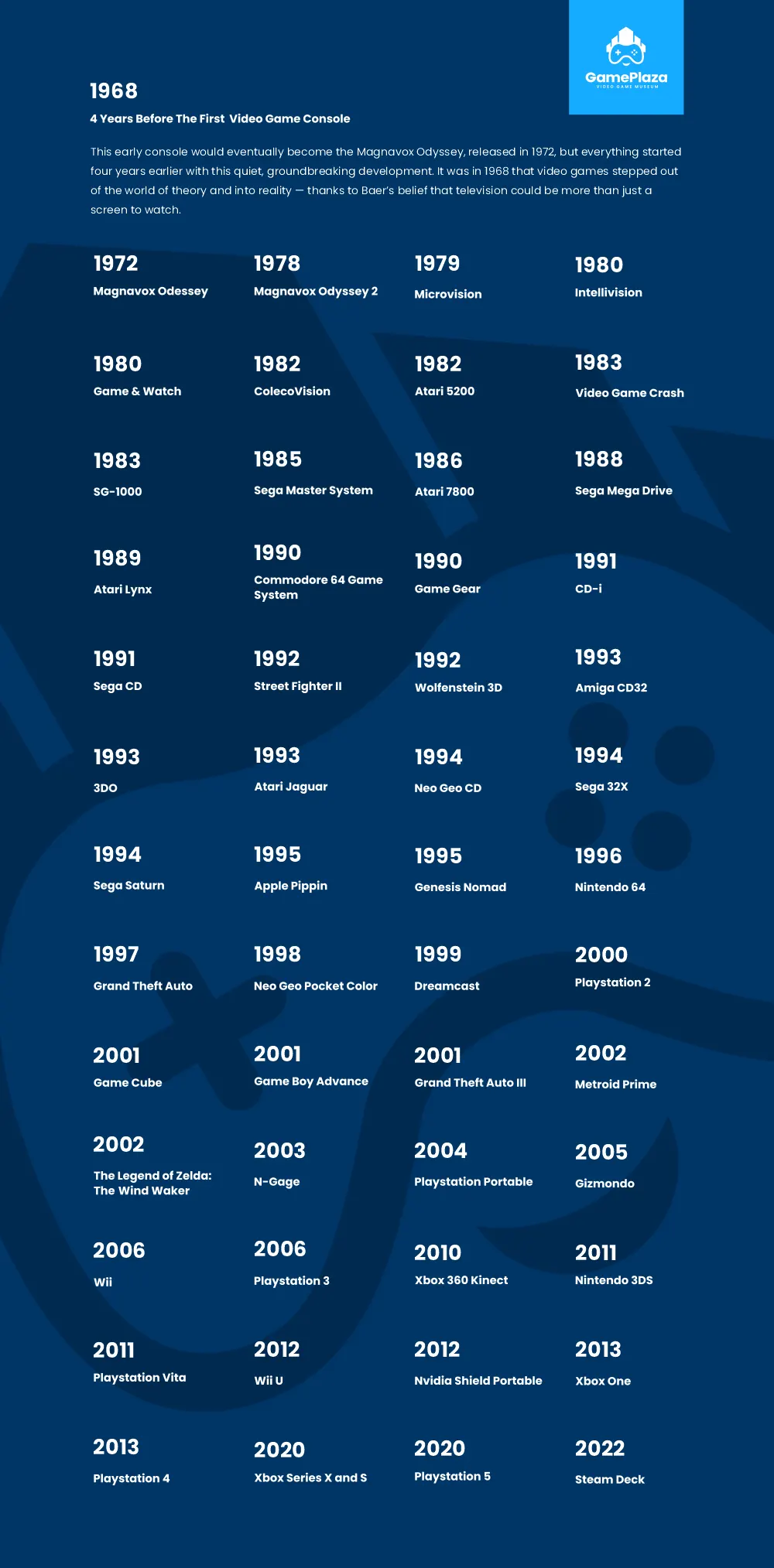
2000s: Gaming diversifies
Gaming in the 2000s became broader in every sense. More genres, more players, more online experiences, and more platforms meant gaming was no longer one scene but many. Console gaming remained important, but PC and networked play also changed expectations.
2010s: Streaming, mobile, and cultural scale
By the 2010s, gaming had expanded beyond the console in the living room. Streaming culture, mobile gaming, esports, and online communities made games visible everywhere. Gaming was no longer just an industry; it had become a dominant part of digital culture.
2020s: Hybrid play and immersive tech
Modern gaming blends nostalgia with innovation. A visitor can enjoy retro arcade cabinets in one moment and step into VR in the next, which is exactly the kind of cross-era experience GamePlaza offers. That overlap shows how gaming no longer moves in a straight line; it constantly mixes old influences with new technology.
Why the timeline matters
Looking at the last 50 years of gaming helps explain why different generations connect to games in different ways. For one person, gaming means standing in front of an arcade machine. For another, it means a home console, online competition, or VR. Seeing those layers together gives the medium more depth.
That is why a timeline is useful. It turns gaming from a pile of separate memories into a clear story of development, creativity, and cultural change. Once you see the path from Pong to modern platforms, today’s gaming world makes much more sense.
To truly appreciate the history of video games, there is no better way than experiencing it firsthand at GamePlaza. More than a museum, GamePlaza invites visitors to step into the worlds that defined generations, from timeless arcade classics to legendary home consoles and modern innovations. Each corner offers a chance to relive nostalgic memories, discover iconic titles, and explore how gaming has evolved into a global cultural phenomenon. A visit to GamePlaza turns history into an interactive adventure, where the story of video games is not only told, but played.