Innovation does not only come from looking forward. Sometimes, the best creative breakthroughs begin by studying how earlier generations solved difficult problems with limited tools, tight constraints, and bold imagination. That is one reason our museum offers more than entertainment. For tech teams, designers, developers, and creative strategists, it can also become a source of perspective and inspiration.
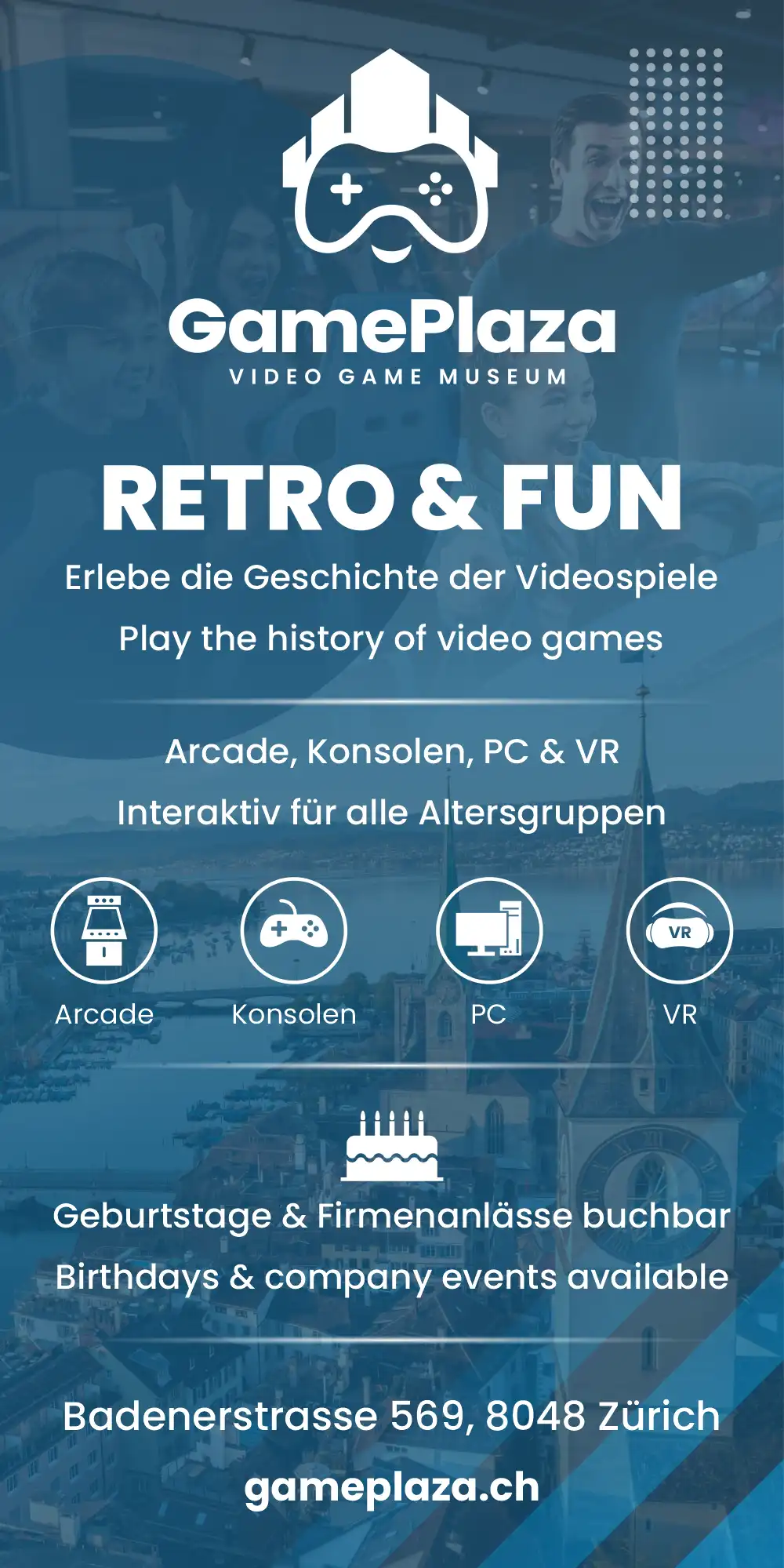
As an interactive video game museum Zurich, we present gaming history as a living timeline of experimentation. Across arcade systems, retro consoles, later hardware generations, PC gaming, and immersive formats such as VR, visitors can see how interactive technology evolved over time. For companies planning an offsite session, innovation workshop, or strategy day, this environment creates a far more stimulating context than a standard meeting room.
Hardware Evolution as a Creative Case Study
One of the most fascinating aspects of gaming history is how much was achieved under technical limitation. Early systems had strict memory constraints, limited processing power, simple audio capabilities, and highly restricted visual output. Yet from those constraints came some of the most iconic designs in entertainment history. This is deeply relevant for modern product teams, because innovation often begins when people are forced to prioritize what matters most.
At GamePlaza, we see these systems not just as nostalgic objects, but as examples of design thinking in action. Every generation of hardware reflects a set of decisions about user experience, accessibility, performance, and creative trade-offs. For developers and product managers, exploring these systems can spark useful conversations about feature discipline, usability, technical focus, and how limitations can actually sharpen innovation rather than weaken it.
That is especially valuable for teams working on digital products today. In many modern workflows, abundance can become a problem: too many tools, too many features, and too many competing priorities. Looking at the history of game hardware reminds teams that clarity, responsiveness, and intuitive design have always been powerful differentiators.
Why Failure Is Just as Instructive as Success
We also believe that innovation culture becomes healthier when teams study failure honestly. The history of gaming is full of ambition, experimentation, and moments where the market did not respond as expected. Some systems arrived too early, some products were overengineered, and others simply missed what users actually wanted. These stories matter because they mirror challenges that modern businesses still face.
Inside our broader gaming context, teams can use historical examples as discussion triggers. Why did one platform become iconic while another disappeared? What happens when technology outpaces market readiness? How should companies decide whether a feature is visionary or unnecessary? These are not only gaming questions. They are strategic business questions that product and innovation teams deal with every day.
For us, this is where a museum setting becomes especially useful. It gives abstract innovation principles a physical form. Instead of talking only in slides and theory, teams can reflect in front of real artifacts, recognizable systems, and playable experiences that make the conversation much more concrete.
Combining Workshop Thinking with Interactive Experience
One of the strongest uses of our venue is the combination of structured work and hands-on exploration. A company can begin with strategy discussions, design thinking exercises, or internal brainstorming, then move into the interactive museum environment to reset energy and engage with examples of game design, hardware evolution, and player experience in a more direct way.
We find this shift especially effective because creative thinking often improves when people change context. After focused discussion, play creates mental movement. It helps teams step out of linear thinking, reconnect with curiosity, and return to ideas from a different angle. That change of pace can make an innovation session feel more alive and much less routine.
Because GamePlaza offers company-event bookings and an interactive setting with arcade machines, consoles, PC gaming, and VR, we are well positioned for teams that want an offsite experience combining inspiration with engagement. The goal is not only to entertain, but to create an environment where better thinking becomes easier.
What Tech Teams Can Take Away
At GamePlaza, we want visitors to leave with more than a fun memory. We want them to leave with new questions, fresh observations, and renewed respect for the relationship between design, technology, and user experience. Gaming history shows again and again that progress is rarely linear. It comes through experimentation, iteration, failure, and the courage to rethink assumptions.
That is why our museum can be such a strong fit for tech companies, startups, agencies, and product teams. In one place, they can explore the evolution of interactive technology, reconnect with the creative logic behind iconic systems, and use that perspective to energize their own work. For teams looking to refresh their innovation process, the right environment can be the beginning of better ideas.
We invite you to bring your team to GamePlaza. Here, gaming history becomes a source of inspiration for modern product thinking, creative problem-solving, and more imaginative collaboration.