
Arcade Cabinet
Point Blank
Year: 1994, Publisher: Namco, Genre: Shooter
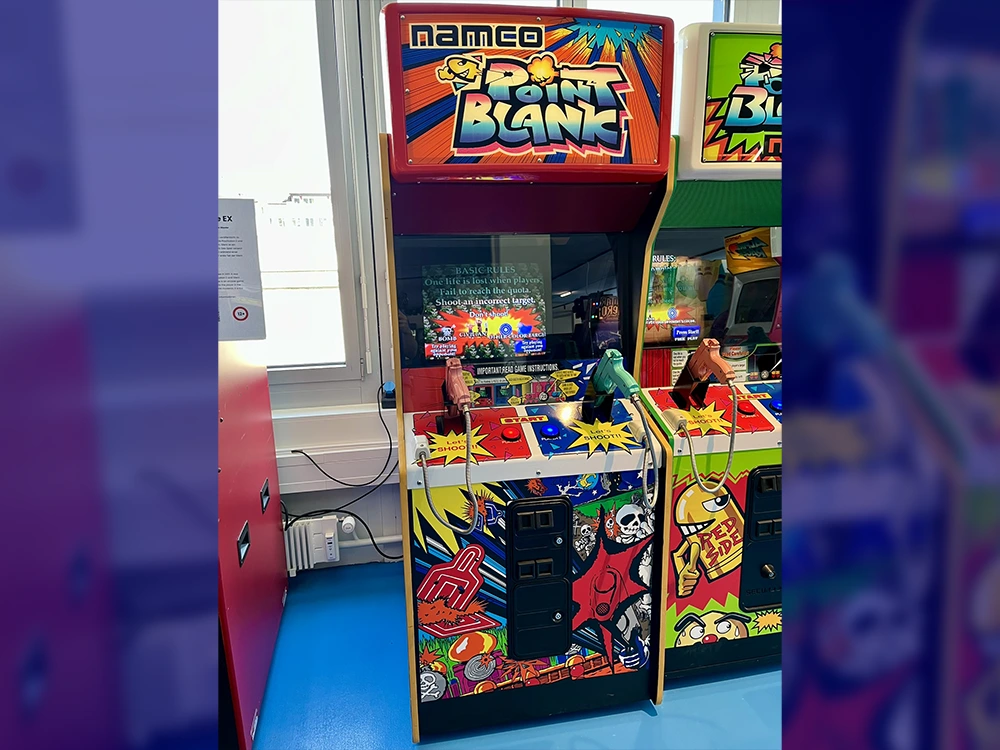
Point Blank is a 1994 arcade light gun game released by Namco. It became one of the company’s most distinctive shooters by replacing serious combat themes with bright visuals, quick mini-games, and playful target challenges. Instead of sending players through a long action campaign, the game throws them into a rapid series of short shooting tests. That structure made Point Blank easy to understand, fun to watch, and perfect for quick arcade sessions. Its colorful style and fast two-player competition helped it stand out from more realistic light gun games of the same era.
Gameplay and features
Point Blank is built around short shooting challenges that test more than just reflexes. Different mini-games focus on speed, memory, accuracy, timing, and careful target recognition.
Key features include:
- Fast light gun mini-games
- One-player and two-player action
- Challenges based on speed, memory, and accuracy
- A colorful and humorous visual style
- Different difficulty levels
- Quick pick-up-and-play arcade structure
The game is easy to learn in seconds, but it stays interesting because every challenge asks for something slightly different.
How to Play Point Blank
Point Blank is simple to start, even for players who do not normally play arcade shooters.
Here is how it works:
- You use the light gun to aim and shoot targets on screen
- Each mini-game gives you a different objective
- Some targets must be hit quickly, while others must be avoided
- Some rounds test memory or judgment instead of simple speed
- Your goal is to clear the challenges and survive as long as possible
Tip: Read the objective first. Shooting too quickly without understanding the round can cause easy mistakes.
Controls and Arcade Machine Guide
Point Blank uses a simple arcade light gun setup that makes it easy for new players to jump in.
- Light gun is used to aim and shoot
- Trigger fires at on-screen targets
- Start button begins the game
The cabinet works especially well for side-by-side play because the short missions are easy for both players and spectators to follow. That social clarity is one of the reasons the game worked so well in arcades.
Tip: Stay controlled with your aim. Wild shooting can be more damaging than slow reactions.
First Time Playing
If this is your first time playing:
- Pay close attention to the instructions before each challenge
- Focus on accuracy before speed
- Remember that some targets are traps
- Stay calm when rules change from one round to the next
- If you can choose stage order, start with the challenge that looks easiest
The game can surprise new players because its rules shift constantly. That constant change is part of what makes it so fun and replayable.
Why Point Blank Was Special
Point Blank was special because it showed that arcade shooting games could be funny, colorful, and welcoming without losing challenge. It kept the excitement of light gun play, but turned it into something closer to a fast party game.
It stood out because of:
- Its mini-game-based structure
- Its nonviolent and playful tone
- Its broad mix of challenge types
- Its easy two-player competition
- Its strong pick-up-and-play appeal
That approach gave it a different identity from military or horror-themed shooters and helped it reach a wider audience.
Point Blank as a Museum Piece
Point Blank is an important museum title because it represents a playful side of arcade shooting history that is easy to overlook. It proves that the light gun format could support humor, party-style competition, and broad accessibility as well as action drama.
It also reflects a strong arcade design philosophy: simple controls, immediate readability, and quick replay value. Those strengths made it ideal for public play and easy for new visitors to enjoy.
In a museum setting, Point Blank helps show how Namco expanded the possibilities of the arcade shooter genre.
Secrets in Point Blank
Point Blank has several useful hidden advantages for players who want better results.
⭐ Bonus points
Octopus stage—shoot the crab; shoot glass/toys/windows; protect stages—shoot doctors
🎯 Mission order can be a strategy
When the game lets you choose between challenges, picking the easiest one first can help you preserve lives and build confidence.
🔫 Not every round rewards wild shooting
Some challenges punish mistakes heavily, and limited-ammo rounds make careful aim especially important.
🧠 Reading is part of the game
Success depends on understanding each task quickly, not just firing fast.
🛠️ Cabinet setup can affect accuracy
Like many light gun games, the feel of aiming can depend on how well the machine is calibrated.
🎮 The real secret is adaptability
Players who adjust quickly to changing rules usually perform much better than those who rely only on reflexes.
Play Point Blank in GamePlaza Video Game Museum, Altstetten, Zurich
You can experience Point Blank at GamePlaza Video Game Museum in Altstetten, Zurich. GamePlaza is an interactive video game museum where visitors can play original machines and explore gaming history directly. That makes it a great place to enjoy arcade shooters that are social, accessible, and instantly fun. If you enjoy light gun games, Namco history, or quick competitive challenges, Point Blank is a fantastic title to try.
Who Will Love This Game
Point Blank is perfect for:
- Fans of light gun arcade games
- Players who enjoy party-style competition
- Families and casual visitors
- Retro gaming enthusiasts
- Anyone who likes fast reflex and accuracy challenges
Its controls are simple enough for beginners, but its variety and pressure make it rewarding even after many plays.
Ready to Play
Pick up the light gun and experience Point Blank for yourself. Visit GamePlaza Video Game Museum in Altstetten, Zurich and discover why this colorful Namco shooter remains one of the most enjoyable arcade challenge games of its era.
Important Info
| Developer(s): | Namco, TOSE |
| Publisher(s): | Arcade: Namco PlayStation: Namco, EU: SCEE Nintendo DS – JP: Bandai Namco Games – NA: Namco Bandai Games – EU: Atari iOS, Android: Namco Bandai Games |
| Platform(s): | Arcade, PlayStation, PlayStation 2, Nintendo DS, iOS, Android |
| Release: | Arcade – JP: October 1994 – NA: 1994 PlayStation Nintendo DS iOS, Android |
| Genre(s): | Light gun shooter |
| Mode(s): | Single player, co-op multiplayer |