
Pinball History: The Story of Classic Pinball Machines
What Is Pinball?
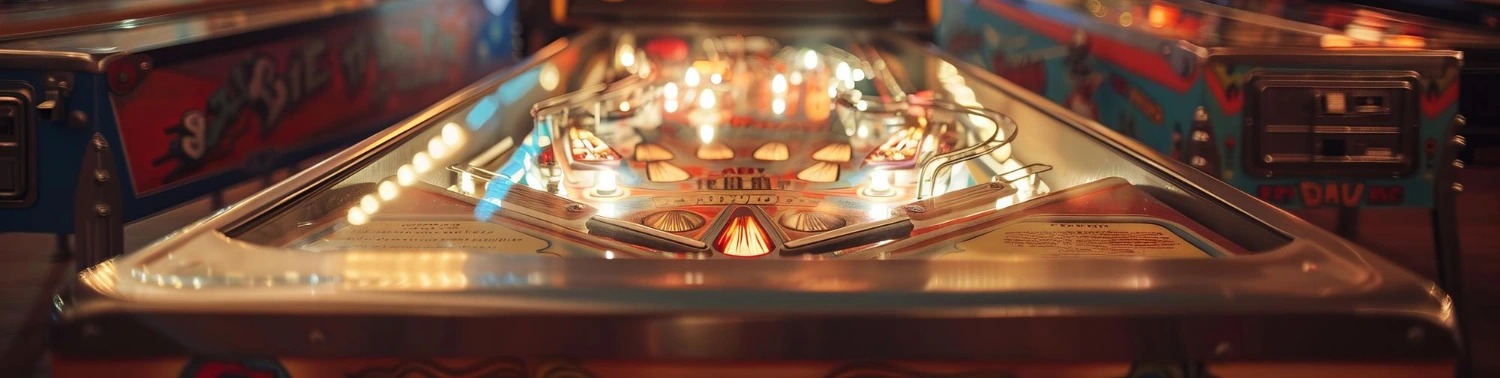
Pinball is an arcade-style game played on a machine where players use flippers to keep one or more balls in play.
The goal usually involves hitting targets, completing objectives, earning points, and keeping the ball from falling out of play.
Modern machines can include sophisticated electronics, digital displays, sound systems, lights, and complex game rules.
Pinball is one of the most recognizable forms of mechanical and electronic entertainment. With physical balls, flippers, lights, sounds, targets, ramps, and constantly changing themes, pinball provides an experience that is very different from traditional video games.
Understanding pinball history also reveals an interesting connection between mechanical amusement machines, arcade culture, electronics, and modern gaming.
The Early Origins of Pinball
Pinball developed from earlier mechanical amusement games that used balls, pins, boards, and other physical elements.
Over time, these machines became more sophisticated and eventually developed into the recognizable pinball machines associated with arcades and entertainment venues.
The Introduction of Flippers
Flippers fundamentally changed how pinball was played.
Instead of simply watching the ball move through the machine, players could actively control its movement and attempt to keep it in play.
This made pinball more interactive and skill-based.
How Pinball Machines Work
A pinball machine combines mechanical and electronic systems.
The playfield contains obstacles, targets, ramps, bumpers, lights, and other elements. Sensors detect interactions with the ball, while electronics calculate scores and control sounds and effects.
The result is a complex combination of physical movement and electronic feedback.
Pinball and Arcade Culture
Pinball became closely associated with arcades and other entertainment spaces.
Players could compete for high scores, challenge friends, and discover new machines with different themes and gameplay mechanics.
Like arcade video games, pinball became part of a broader culture of public entertainment.
Pinball Themes
One of the defining characteristics of pinball machines is their visual and thematic variety.
Machines have been built around themes involving movies, music, sports, fantasy, science fiction, history, and many other subjects.
The theme influences not only the artwork but often the sounds, rules, missions, and physical elements of the machine.
Pinball and Video Games
Pinball is not technically the same as a video game, but it shares many characteristics with arcade gaming.
Both can involve high scores, increasing difficulty, specialized controls, short gameplay sessions, and competition between players.
Pinball also demonstrates how entertainment technology can combine physical and digital systems.
Why Pinball Remains Popular
Pinball has survived many changes in entertainment technology.
Part of its appeal comes from physical interaction. Players can see the ball move, hear the machine respond, and physically control the flippers.
Every game can also be unpredictable because the ball moves differently each time.
Classic and Modern Pinball
Older pinball machines often relied more heavily on mechanical systems and simpler electronics.
Modern machines can include digital displays, complex software, advanced sound systems, sensors, and sophisticated game rules.
Despite these differences, the fundamental experience remains recognizable.
Pinball as a Collectible
Pinball machines are also popular among collectors.
Their physical construction, artwork, electronics, mechanical systems, and historical significance make them interesting objects beyond their entertainment value.
Preserving older machines can therefore help protect an important part of amusement and gaming history.
Experience Pinball and Gaming History in Zürich
Visitors interested in pinball in Zürich can explore pinball as part of the broader history of arcade and gaming culture.
GamePlaza connects classic gaming experiences with the wider story of entertainment technology, allowing visitors to discover how different forms of interactive entertainment developed over time.
Pinball for Families and Friends
Pinball can be enjoyed by different generations.
Parents may remember playing classic machines, while younger visitors can discover the physical gameplay for the first time.
Because a game can be played relatively quickly, pinball can also work well as a casual activity with friends or family.
Why Pinball Belongs in Gaming History
Although pinball predates modern video games, it shares an important history with arcade entertainment.
It demonstrates the long-standing human interest in interactive machines, competition, scoring, physical controls, and entertainment technology.
Understanding pinball therefore adds another dimension to the history of gaming.
Conclusion
Pinball combines mechanical engineering, electronics, design, sound, art, and interactive entertainment.
From its early mechanical roots to modern electronic machines, pinball has remained an important part of arcade and amusement culture.
For anyone interested in gaming history, classic entertainment, or interactive technology, pinball offers a fascinating experience.
FAQ
What is pinball?
Pinball is an interactive arcade-style game in which players use flippers to keep a ball in play while hitting targets and earning points.
Is pinball a video game?
Traditional pinball is primarily a mechanical and electronic game rather than a video game, although modern machines use sophisticated digital technology.
Why is pinball important to gaming history?
Pinball helped shape arcade and amusement culture and shares many concepts with later interactive gaming, including scoring, competition, specialized controls, and short gameplay sessions.
Where can I explore pinball and gaming history in Zürich?
GamePlaza offers visitors an opportunity to explore the wider history of gaming and interactive entertainment in Zürich.