
Arcade Cabinet
Mortal Kombat II
Year: 1993, Publisher: Midway, Genre: Fighter
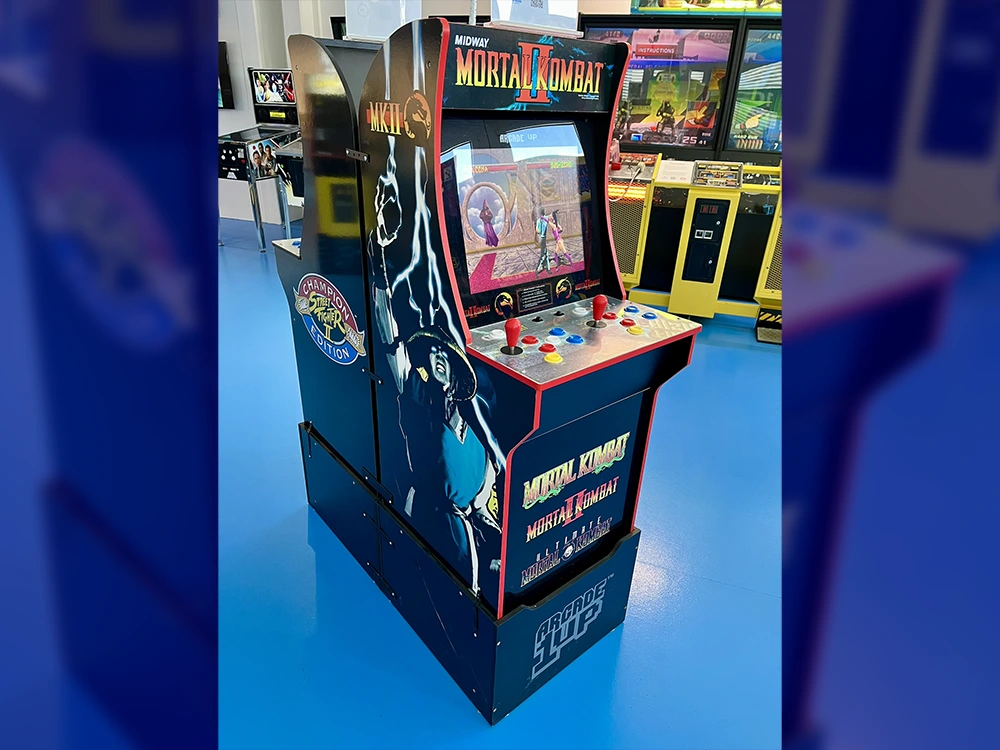
Mortal Kombat II is a 1993 fighting arcade game released by Midway. As the sequel to the original Mortal Kombat, it expanded the roster, improved the combat, and pushed the series’ dark style even further. The game quickly became one of the most famous arcade fighters of the 1990s. With digitized characters, brutal finishing moves, and a darker fantasy setting, Mortal Kombat II stood out immediately from other fighting games of its era. It remains one of the most celebrated entries in the series and one of the key titles in arcade fighting game history.
Gameplay and features
Mortal Kombat II is built around fast one-on-one battles, precise timing, and special moves. Compared with the first game, it feels quicker, deeper, and more polished.
Key features include:
- One-on-one fighting action
- A larger roster of playable fighters
- Faster pacing than the original game
- Special moves and combos
- Multiple finishing move types
- A darker and more dramatic visual style
The game is easy to begin at a basic level, but strong players learn spacing, combos, and character matchups very quickly.
How to Play Mortal Kombat II
Mortal Kombat II is simple to understand for anyone familiar with arcade fighting games.
Here is how it works:
- You choose a fighter and face an opponent
- Your goal is to win two rounds before your opponent does
- You attack using punches, kicks, and special moves
- Each fighter has unique techniques and strengths
- After winning, you may have the chance to perform a finishing move
Tip: Do not rely only on button-mashing. Timing and spacing are much more important.
Controls and Arcade Machine Guide
Mortal Kombat II uses a control layout that became iconic in arcades.
- Joystick controls movement
- Buttons are used for high punch, low punch, high kick, low kick, and block
- Start button begins the game
This control system gives players a lot of direct control over offense and defense. It also helps make each character feel dangerous once their moves are understood.
Tip: Learn blocking early. Good defense is just as important as learning special attacks.
First Time Playing
If this is your first time playing:
- Start with a character who feels comfortable to control
- Focus on basic punches, kicks, and blocking first
- Do not worry about memorizing every special move immediately
- Watch your opponent’s patterns
- Try to stay calm when the pace gets faster
The game can feel intense at first, but it becomes much easier once you understand its rhythm and start recognizing each fighter’s strengths.
Why Mortal Kombat II Was Special
Mortal Kombat II was special because it took everything people noticed about the original and made it bigger, faster, and more confident. It was not just a sequel. It was the game that fully defined what Mortal Kombat would become.
It stood out because of:
- Its expanded character roster
- Its faster and smoother combat
- Its brutal finishing moves
- Its dark fantasy setting
- Its unforgettable arcade presence
It also became a major cultural talking point because of its violence, mystery, and instantly recognizable style.
Mortal Kombat II as a Museum Piece
Mortal Kombat II is an important museum title because it represents a major moment in fighting game history. It shows how arcade sequels could respond to competition by becoming more polished, more dramatic, and more ambitious.
The game is also a key example of 1990s arcade identity. Its cabinet, sound, digitized actors, and crowd appeal made it the kind of machine people gathered around, whether they were playing or just watching.
In a museum setting, Mortal Kombat II helps explain why arcade fighters became such a huge cultural force in the 1990s.
Secrets in Mortal Kombat II
Mortal Kombat II is famous for its hidden content and arcade rumors.
🌙 Pit stage
Shadows over moon + double flawless + no-block fatality = Reptile fight
🥊 250 2P matches
Pong mini-game
☠️ Secret fighters helped build the game’s legend
Hidden opponents like Jade, Smoke, and Noob Saibot gave players extra reasons to experiment and share rumors.
🩸 Finishing moves go beyond Fatalities
The game also introduced other endings such as Friendships, Babalities, and stage-specific finishers.
🕹️ Special hidden surprises rewarded dedicated players
The arcade game included unusual hidden events that many casual players never discovered.
📣 Rumors became part of the experience
Much of the game’s long life in arcades came from players talking about supposed secrets, hidden characters, and strange conditions.
🎯 The real secret is match knowledge
Learning spacing, reactions, and character-specific tricks matters more than knowing flashy moves alone.
Play Mortal Kombat II in GamePlaza Video Game Museum, Altstetten, Zurich
You can experience Mortal Kombat II at GamePlaza Video Game Museum in Altstetten, Zurich. GamePlaza is an interactive video game museum where visitors can play original machines and explore gaming history directly. That makes it an ideal place to enjoy classic fighting games in the kind of arcade setting where they first became legendary. If you enjoy arcade fighters, 1990s gaming culture, or the history of Mortal Kombat, this is an essential game to try.
Who Will Love This Game
Mortal Kombat II is perfect for:
- Fans of fighting games
- Mortal Kombat enthusiasts
- Retro gaming visitors
- Players who enjoy competitive one-on-one action
- Anyone interested in classic arcade controversy and history
Its simple structure makes it easy to start, while its hidden depth gives experienced players plenty to explore.
Ready to Play
Choose your fighter and experience Mortal Kombat II for yourself. Visit GamePlaza Video Game Museum in Altstetten, Zurich and discover why this Midway classic remains one of the most iconic arcade fighting games ever made.
Important Info
| Developer(s): | Midway Probe Software (MD/GEN, GG, GB, SMS, Amiga, DOS) Sculptured Software (SNES) Probe Entertainment (32X, SS, PS) Sony Online Entertainment, Digital Eclipse, Backbone Entertainment (PlayStation 3) |
| Publisher(s): | Midway Acclaim Entertainment (home versions) |
| Producer(s): | Ken Fedesna Neil Nicastro Robert Leingang, Robert O’Farrell, Billy Pidgeon (DOS) |
| Designer(s): | Ed Boon John Tobias |
| Programmer(s): | Ed Boon Brian O’Shaughnessy (DOS) |
| Artist(s): | John Tobias Tony Goskie John Vogel Terry Ford (DOS) |
| Composer(s): | Dan Forden Matt Furniss (Sega Genesis, Game Gear, Master System) |
| Series: | Mortal Kombat |
| Platform(s): | Arcade |
| Release: | November 1993 |
| Genre(s): | Fighting game |
| Mode(s): | Single-player, multiplayer |
| Arcade system: | Midway T Unit |