
Arcade Cabinet
Time Crisis 2
Year: 1998, Publisher: Namco, Genre: Shooter
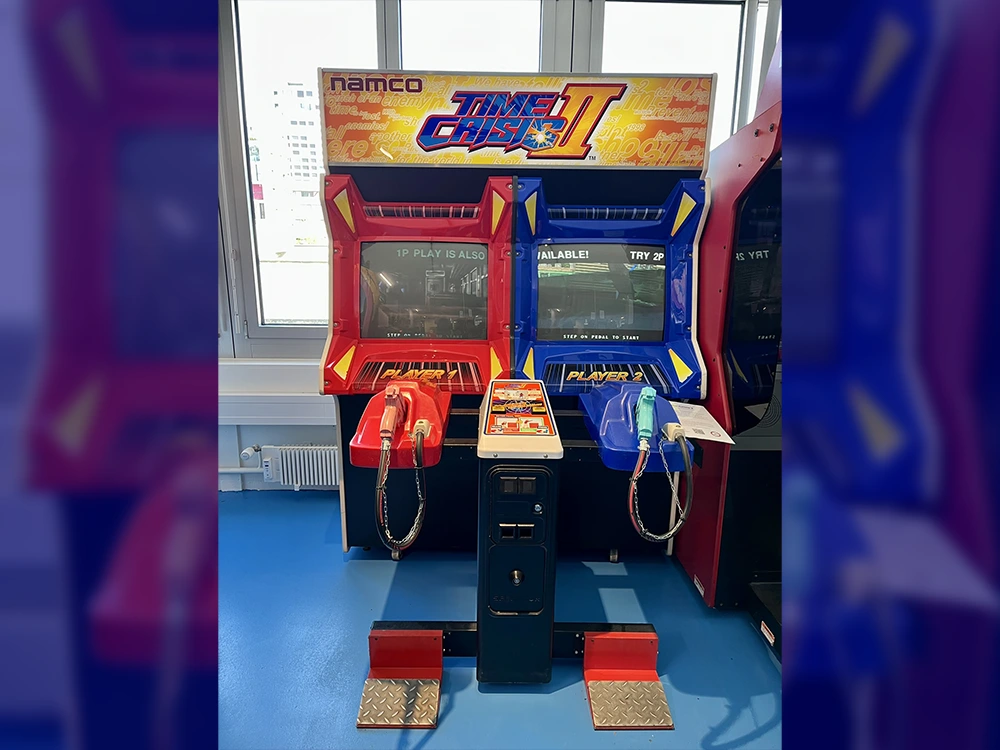
Time Crisis 2 is a 1997 arcade light gun shooter released by Namco. It is the second game in the Time Crisis series and the title that expanded the formula by introducing two-player cooperative action. The game kept the famous pedal-based cover system from the original, but made the experience bigger and more social by letting two players fight side by side. That change helped turn Time Crisis 2 into one of Namco’s most memorable arcade shooters of the late 1990s. It remains one of the defining light gun arcade games of its era and a major part of the series’ identity.
Gameplay and features
Time Crisis 2 is built around fast reactions, accurate shooting, and smart use of cover. The game keeps the core rhythm of stepping out to fire and stepping back to survive.
Key features include:
- Pedal-based cover shooting
- Two-player cooperative play
- A standard handgun with automatic reloading in cover
- The crisis flash warning system
- Short machine gun sections
- Large cinematic action scenes
The biggest new feature is the cooperative play. Instead of fighting alone, players can now protect each other and cover different parts of the screen at the same time.
How to Play Time Crisis 2
Time Crisis 2 is easy to understand, even if you are new to arcade shooters.
Here is how it works:
- You use the light gun to aim and shoot enemies
- Press the pedal to come out of cover and fire
- Release the pedal to hide and reload
- Avoid enemy attacks, obstacles, and time loss
- Clear each area before moving to the next section
Tip: Do not stay hidden for too long. In this game, wasting time can be just as dangerous as enemy fire.
Controls and Arcade Machine Guide
Time Crisis 2 uses the classic gun-and-pedal setup that made the series famous.
- Light gun is used to aim and shoot
- Pedal controls cover and exposure
- Releasing the pedal reloads your weapon
- Start button begins the game
One of the most important parts of the arcade version is its linked two-player cabinet design. Each player has their own screen area and pedal, which helps make co-op play feel clearer and more immersive.
Tip: Learn the rhythm of stepping out, firing quickly, and hiding again. That rhythm is the heart of the game.
First Time Playing
If this is your first time playing:
- Focus on learning the pedal system first
- Use cover often, but not too slowly
- Watch for the crisis flash warning
- Aim for accuracy instead of spraying wildly
- If playing with a partner, split enemy coverage when possible
The game feels intense at first, but once the cover mechanic clicks, it becomes much easier to follow and much more satisfying.
Why Time Crisis 2 Was Special
Time Crisis 2 was special because it took an already smart arcade formula and made it cooperative. That one change made the game feel more social, more tactical, and more exciting to watch in an arcade.
It stood out because of:
- Its famous pedal-based cover mechanic
- Its strong two-player co-op design
- Its clear crisis flash warning system
- Its linked cabinet presentation
- Its fast and cinematic action
It helped show how arcade shooters could become more dynamic without losing the simple immediacy that made them fun.
Time Crisis 2 as a Museum Piece
Time Crisis 2 is an important museum title because it represents one of the strongest examples of late-1990s arcade shooter design. It refined a great idea instead of replacing it, and that made the series stronger.
The cabinet design is also a major part of its value. The light gun, pedal, and linked two-player format turned the machine into a true arcade experience that could not be fully recreated by a standard home setup.
In a museum setting, Time Crisis 2 helps show why light gun games were such a major part of arcade culture.
Secrets in Time Crisis 2
Time Crisis 2 has several useful hidden advantages for players who want to improve.
🏙️ Bonus alley
Stage 1—shoot hat 4 times
🔫 Stage combos
Shoot barrels/trains/other destructibles for ammo/lives
🎁 Many bonuses
Shoot background objects throughout
🔫 Good co-op teams divide the screen well
Strong players do not always shoot the same enemies. They cover different angles and reduce pressure together.
⏱️ Time is a real danger
Running out of time costs a life, so staying in cover too long can be just as risky as bad aim.
⚠️ The crisis flash is essential
This warning system helps you know exactly when to retreat behind cover.
🤝 Friendly fire hurts score, not survival
Accidentally shooting your partner affects points, but it does not directly cost a life.
🎯 The real secret is rhythm and teamwork
The best runs come from accuracy, timing, and cooperation rather than panic shooting.
Play Time Crisis 2 in GamePlaza Video Game Museum, Altstetten, Zurich
You can experience Time Crisis 2 at GamePlaza Video Game Museum in Altstetten, Zurich. GamePlaza is an interactive video game museum where visitors can play original machines and explore gaming history directly. That makes it a perfect place to enjoy classic light gun games the way they were designed to be played. If you enjoy fast reflexes, cooperative arcade action, or Namco shooter history, Time Crisis 2 is an excellent game to try.
Who Will Love This Game
Time Crisis 2 is perfect for:
- Fans of light gun shooters
- Players who enjoy co-op arcade games
- Retro gaming enthusiasts
- Visitors interested in Namco arcade history
- Anyone looking for fast and satisfying action
Its controls are easy to understand, but its mix of timing, pressure, and teamwork gives it lasting depth.
Ready to Play
Grab the light gun and experience Time Crisis 2 for yourself. Visit GamePlaza Video Game Museum in Altstetten, Zurich and discover why this Namco classic remains one of the most exciting arcade shooters of its time.
Important Info
| Developer(s): | Namco |
| Publisher(s): | Namco |
| Director(s): | Takashi Satsukawa |
| Producer(s): | Takashi Sano |
| Composer(s): | Kaz Nakamura |
| Platform(s): | Arcade PlayStation 2 |
| Release: | Arcade – JP: December 13, 1997 – NA: February 1998 PlayStation 2 |
| Genre(s): | Rail shooter |
| Mode(s): | Single-player, multiplayer |
| Arcade system: | Namco System 23, Super Namco System 23 |